Making Magickal Pokeberry Ink
Magickal Herbalism: Making Magickal Pokeberry Ink
One of my favorite things about Magickal Herbalism is the versatility. There are so many skills you can learn and implement with each plant you choose. As many of you know, Kitchen Witchery and Tea Magick are two of my favorites. But why stop there when there is?
Another skill I have gained over the years is making ink from plants such as cabbage. You can use the ink you create for tasks such as writing spells, performing spells, and creating your Grimoire or BOS. Creating your own magickal inks provides a well-deserved magickal boost to your workings. But this boost doesn’t stop there. In making your own tools, like ink, you also create an energetic bond with your work through the act of creation. A little piece of you flows into what you formulate, just as the ink flows from the pen as you manifest your needs and desires.
I love using inks with different types of dip pens, from traditional fountain pens to glass dip pens. Of course, writing with any dip pen is another skill to learn on its own. This skill does require some practice, but to practice, you need the necessary tools, which include ink!
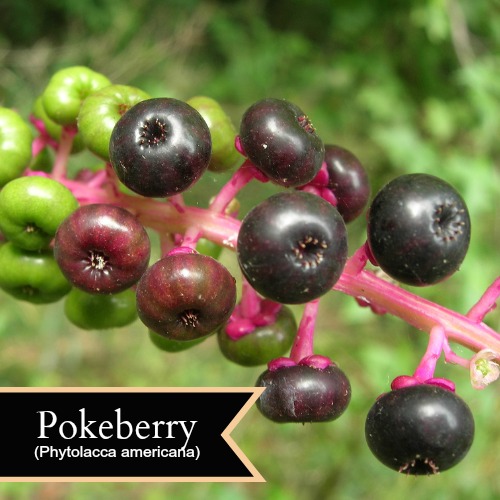
In this tutorial, I will show you how I make Pokeberry Ink. This ink is very simple to make. Pokeweed is a native North American plant that is abundant in the summer and fall. Finding the berries shouldn’t be hard. Additionally, Pokeberries are already highly pigmented, making your ink very dark and easy to read.
About Pokeweed
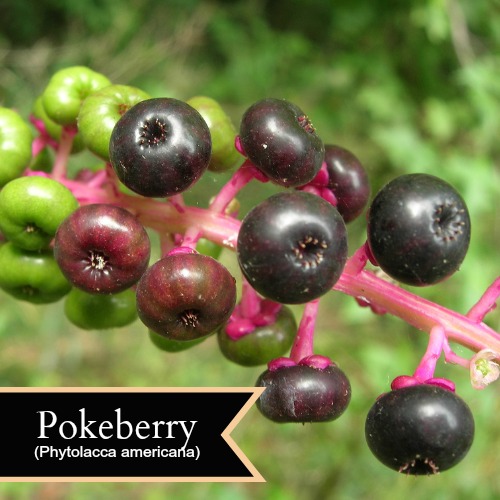
Phytolacca americana
Other Names: American nightshade, poke, poke sallet, poke salet, red ink plant, crowberry, cancer root, coakum, chongras, pokeberry…
When grown in the right soil type and under the right conditions, this plant can reach 10 feet tall. It dies back in the winter down to its deep taproot to re-emerge each spring. If you want this plant in your magickal garden, be sure it grows in the right location where it can flourish. Once the taproot is established, it is challenging to get rid of this plant.
We have several good examples in our yard. I have two that have planted themselves on either side of my tea garden; each being outside critical magickal and not-so-magickal locations of my home. When I say they planted themselves, I mean it. I have accepted their rooting in these areas as a sign of protection watching over my work and family. After all, these are the locations where we most commonly enter and leave our home, and where I harvest herbs for various teas and the food we cook. The locations are also where I perform most of my magickal workings.
We also appreciate their location because our wild birds find Poke irresistible. We have a family of Bluebirds who are now accustomed to our comings and goings as they devour the dark purple berries. Then there is the family of Gray Catbirds who also seem to enjoy the berries. This family of birds sings and chatters as they pluck their dinner from the plant. It's quite pleasant to open my office door and hear their playful chatter and birdlike meowing.
Poke has even made an appearance in music. In 1969, Tony Joe White’s “Polk Salad Annie” became an instant country hit describing the lifestyle and misfortunes of Annie. “She’d go out in the evenings to pick a mess of it… Carry it home and cook it for supper, ’cause that’s about all they had to eat.” Poke sallet (young poke greens, boiled twice) has historically been a popular Southern dish.
While many people have eaten poke by boiling the leaves, it is essential to remember that the entire plant is poisonous to humans. Birds, however, can dine on this plant’s berries with no issue.
Native Americans treated many ailments with pokeweed poultices and even painted horses with it. During the Civil War, soldiers used pokeberry ink to write home from the battlefields.
Poultices of pokeweed have been used to treat rheumatism, sprains, bruises, and “bewitchment.” Poke is also an effective remedy for deeply rooted infections, but because of its toxicity, it should never be used without the direct supervision of a qualified and experienced herbalist. The list of possible side effects of Pokeweed includes severe stomach cramping, nausea and vomiting, difficulty breathing, weakness, hypotension, convulsions, dysentery, blindness, and eventual death.
The Magickal Aspects
Folklore
· Courage
· Hex-Breaking, Purging/Cleansing/Purifying
· Exorcism
· Can be mixed with other plants to help you find lost objects
· Protection
Pokeberries can be used in place of blood in any ritual. Some sources say the word Poke means "blood" (but I could not find a credible source confirming this).
Grow Pokeweed around the perimeter of your home to protect it and expel negativity.
Making Your Ink
I like to make all of my magickal supplies on my working altar. This altar is set up specifically for making items I plan to use in spells and rituals. Not everyone has the space for multiple altars; use the area you have available.
Supplies/Ingredients:
2C pokeweed berries**
½ to 1 tsp white vinegar
A glass jar or bottle
A strainer
A spoon
A bowl to catch the juice.
Instructions:
Mash the berries into a pulp in a small strainer over your bowl. This will allow the juice to seep into the jar while the berries' skins and seeds remain behind. Crush the berries as much as you can with your spoon. I also found that I could use my spoon to help remove many ripe berries from their stems.
Finishing it Up
Now that you have your juice, you will notice that it is very thick. Add approximately ½ tsp of vinegar to thin your ink. You can add more if you like, just not too much. Other recipes call for ½ tsp salt and ½ tsp vinegar. I found either version worked fine.
Carefully, pour the juice into your jar, add the vinegar (and salt if desired), and mix thoroughly. This will thin the ink enough for use in a fountain pen; the vinegar-or-salt combo will also help prevent spoilage.
Storing your ink
As with all herbs and herbal products, you will want to store your ink in a cool, dry place. I use small 2oz jars with wide-mouth lids to store my inks. Not only do they seal well, but the wide mouth allows me to easily dip my pen into the ink when in use.
Using your ink in magickal tasks
Use a quill or calligraphy dip pen to write spells, draw symbols, and incantations during and in preparation for magical workings. I found the ink worked best with my traditional dip quills and not so much with my glass dip pen. The ink really does have a dark purple pigment, as you can see! I used a somewhat porous paper when writing with this ink. I find that watercolor paper and basic cardstock work well.
Be sure to close your jar when not in use.
** USE CAUTION! Pokeweed, seeds, and much of the rest of the plant are poisonous. The berries also stain, but the ink on the skin does not last long and washes off immediately. I had the juice all over my fingers and hands, and it was all gone after proper handwashing and my show the next morning. If you are concerned about this plant's toxicity, you can wear gloves throughout the process. Also, note that the berries can squirt when you are pressing them into your strainer. It is best to do this in a place where you are not concerned about where the juice flies. Processing your berries outside is recommended.
After creating your painting, you can spray it with an archival spray with UV protection (found at most art supply stores). This will give your work a longer life. I don’t use this to preserve my work because this kind of spray is harsh. I prefer to keep my work as natural as possible.